

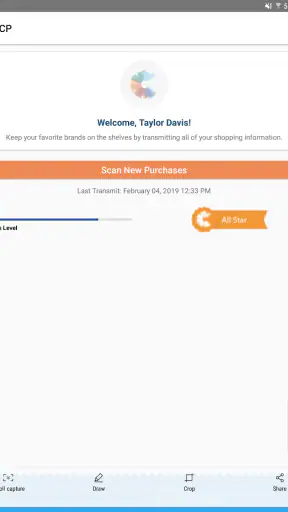
I approached NCPMobile as a practical shopping companion rather than a typical retail app. Its purpose is straightforward: it lets members scan and transmit details about purchases. That sounds narrow, and it is, but the narrow focus is also what makes the experience easy to understand. You are not opening it to browse products, compare prices, build a cart, or place an order. You are using it to record shopping activity for the National Consumer Panel.
The app belongs to the Shopping category and is developed by National Consumer Panel. It is free to install, carries an Everyone age rating, and has been available since October 30, 2013. Those details matter because they set the right expectation: this is a low-cost participation tool, not a paid shopping service or a full replacement for a supermarket, marketplace, receipt organizer, or budgeting app.
In my experience, the main question is not whether the interface is exciting. It is whether the scanning and transmission process fits naturally into your routine. If you already want to take part in consumer research, the app gives that task a focused home on your phone. If you simply want rewards for ordinary shopping without any extra reporting, the value becomes much less obvious.
How the shopping workflow feels in everyday use
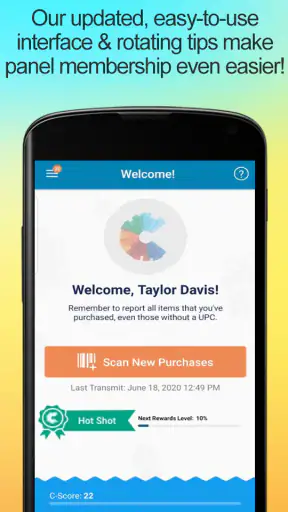
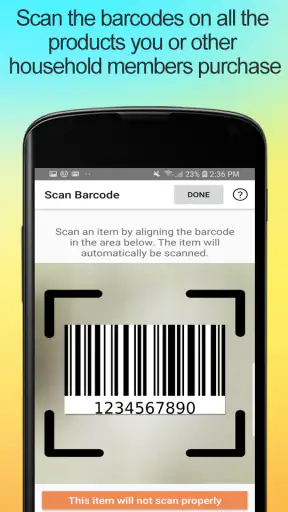
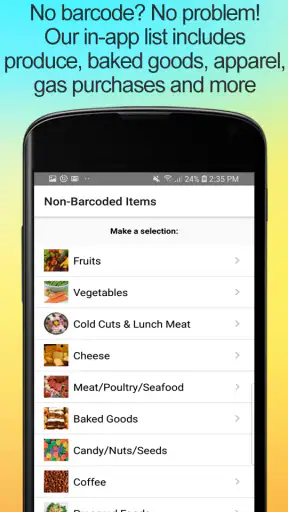
The central action is scanning purchases and sending the information onward. That makes the app most useful when treated as part of the shopping routine rather than something you open randomly. After returning from a store, I would keep the receipt and the purchased items together, open the app when I had a quiet moment, and work through the record instead of trying to remember everything much later.
That small habit is more important than it may seem. Shopping trips contain easy-to-forget details: a different size, a special variety, several similar packages, or an item bought for someone else. Recording the trip soon after it happens reduces the mental work involved. The app is therefore better suited to deliberate, repeatable use than to people who dislike any post-shopping administration.
The scan-and-transmit design also separates this service from ordinary shopping apps. A supermarket app usually helps you find products, collect coupons, order groceries, or manage delivery. A receipt-scanning utility is generally centered on saving proof of purchase for personal records or rewards. NCPMobile is oriented toward transmitting purchase information through the National Consumer Panel, so its usefulness depends on your willingness to contribute that information rather than merely store it.
I would not describe the process as entertainment, and that is not a criticism. The app has a job to do, and a focused tool can be preferable to a crowded shopping platform. The trade-off is that every extra step feels more noticeable because the app does not surround the task with browsing, deals, or other distractions. You will appreciate the directness if you want a dedicated panel app; you may find it limited if you expected a broad shopping assistant.
What the free price really means
There is no purchase price for access: the app is free. That makes trying it relatively simple, especially for someone who wants to see whether panel participation fits their routine before committing time to it. Still, free access should not be confused with guaranteed financial value. The app’s cost is measured less in money and more in attention, scanning effort, and the discipline required to report purchases accurately.
I would judge the value in two layers. First, there is the practical value of having a mobile way to scan and transmit shopping information. Second, there is the personal value of participating in the panel and any rewards or recognition associated with that participation. The first is clear from the app’s purpose. The second depends on the terms of the panel and on how consistently you use the service, so I would not treat the app as a guaranteed money-saving tool.
This distinction is essential when comparing it with cashback apps. A cashback service usually makes its appeal easy to calculate: complete a qualifying action and receive a stated benefit. NCPMobile is different because its usefulness comes from participation in a consumer panel. Someone looking for a predictable return on each receipt may prefer a conventional cashback option. Someone interested in sharing purchase behavior through a dedicated panel may consider the free app worthwhile even when the benefit is not immediate.
The app’s public reception suggests that many people find the concept worthwhile. It has an average rating of 4.5 from around 62 thousand ratings, with over 28 thousand written reviews, and it has passed one million installs. I see those figures as evidence of sustained interest rather than a promise that every user will have the same experience. A high average does not remove the need to decide whether scanning purchases is worth your own time.
Small workflow choices that make a difference
My first practical tip is to choose a fixed reporting moment. For example, you might scan after unpacking groceries, before putting the receipt in your wallet, or at the end of a shopping day. Waiting until the end of the week makes the task harder because memory becomes part of the process. The app can handle the transmission step, but it cannot make forgotten shopping details accurate again.
Second, keep the phone steady and give each scan a moment to register rather than rapidly moving from one item to the next. This is a simple habit, but it reduces the chance of having to repeat work. If a trip includes many similar products, pause long enough to distinguish them instead of assuming that one scan represents the whole group.
Third, treat the receipt as a temporary checklist, not as a substitute for careful review. A receipt can help confirm the store trip and item names, but packaging and purchase context may still matter. I would review the captured information before transmitting it, particularly after a large shop or when several products look alike. That extra check is where the app changes from a quick camera action into a reliable reporting workflow.
These habits also reveal the app’s main limitation: the quality of the result depends on the user’s consistency. A person who enjoys tidy records may find the process manageable. A person who routinely loses receipts, shops in a rush, or dislikes entering information after a trip may abandon it even if the scanning itself is simple.
Where it fits among other shopping tools
NCPMobile should not be compared with a grocery delivery app on convenience alone because the two solve different problems. Delivery apps reduce the effort of buying things. This app adds a reporting step after buying them. A price-comparison tool helps you decide where to purchase. NCPMobile is concerned with recording what was purchased for panel participation.
It is closer to a receipt or purchase-research app, but even there the emphasis is different. A personal receipt manager is useful when you want searchable records, returns support, expense tracking, or household budgeting. NCPMobile is more appropriate when your goal is to transmit purchase information to the National Consumer Panel. If you need both functions, you may end up using two apps because one is not designed to replace the other.
That separation can be a strength. The interface does not need to carry budgeting charts, shopping lists, product reviews, or store catalogs. A focused screen can make a repeated task less confusing. The weakness is equally clear: users who want one app to manage the complete shopping journey will find the experience incomplete.
Who is most likely to get value from it?
I would recommend trying it to people who are comfortable with structured routines and genuinely interested in consumer research. It is especially suitable for shoppers who make regular household purchases and can spare a few minutes to record them soon afterward. The free price lowers the barrier to testing the workflow, while the Everyone rating makes it broadly approachable from an age-label perspective.
It can also suit households where one person already manages grocery records. That person may find it easier to make panel reporting part of the same routine as unpacking, checking the receipt, or organizing the pantry. The app becomes less of a separate chore when attached to something that already happens after shopping.
I would be more cautious for users who expect instant savings, automatic cashback, or a shopping catalog. The app’s value is not the same as a coupon app’s value. It is also not the right choice for someone who wants detailed personal spending analysis, because transmitting purchase information for panel participation is a different goal from building a private budget.
Frequent shoppers should also consider whether they can maintain accuracy across many trips. More shopping creates more opportunities to use the app, but it also creates more reporting work. The best candidate is not necessarily the person who shops most often; it is the person who can repeat the process without finding it irritating.
Questions I would settle before making it a habit
The first question is whether it costs anything to install or use. Access is free, so you can evaluate the basic experience without paying for the app. The more important question is whether the time involved feels worthwhile to you. I would spend a short trial period observing how long a normal shopping report takes and whether I can complete it consistently.
The second question is whether it replaces a receipt organizer or cashback service. It does not occupy the same role as either one. Its defining task is scanning and transmitting purchases for the National Consumer Panel. If you need searchable receipts, spending categories, or a clearly defined cashback transaction, keep using a tool built around that purpose.
The third question is whether it works for occasional shoppers. It can still be relevant, but occasional use makes routine harder to establish. Someone who shops only now and then may need to be especially careful about remembering the reporting process after each trip. The app is more naturally suited to people who can connect it with a regular household habit.
The fourth question is whether the app is worth keeping if the process feels repetitive. My answer is conditional: keep it if the panel participation itself matters to you and the scan-and-send routine remains manageable. Skip it if you are only hoping for effortless rewards and find the reporting obligation frustrating. Free installation does not make an unwanted task valuable.
My balanced verdict on NCPMobile
NCPMobile is a focused Shopping app with a clear purpose, and I respect that it does not pretend to be a complete retail platform. The free price makes experimentation easy, the long availability since 2013 suggests that it is an established option, and its strong average rating indicates that the model works for a substantial audience. The developer, National Consumer Panel, is also clearly tied to the app’s panel-oriented role rather than to ordinary store shopping.
Its best quality is the direct connection between a real-world purchase and a mobile reporting action. With a fixed routine, a receipt kept nearby, and a careful review before transmission, the process can become reasonably practical. The less obvious cost is attention: you must remember to do it, distinguish similar items, and accept that the app’s value depends on participation rather than on an automatic discount at checkout.
My recommendation is to try it if you want to take part in consumer research and can make post-shopping scanning a habit. I would skip it if your priority is guaranteed cashback, personal expense management, product discovery, or one-stop grocery shopping. For the right user, it is a useful dedicated tool. For everyone else, the free download may still be harmless to test, but the app will not turn an unwanted reporting chore into a conventional shopping reward.


